

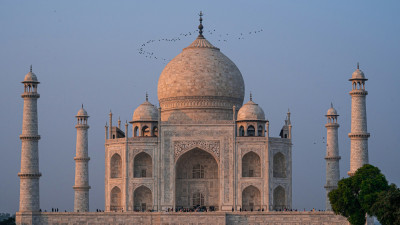
Agra, a city in the northern Indian state of Uttar Pradesh, is renowned for its rich historical and cultural heritage. Here are some key aspects of Agra: Agra is famously known for being the home of the Taj Mahal, one of the Seven Wonders of the World. The city has a rich history that dates back to the Mughal Empire, and it was one of the main capitals during this era. The Taj Mahal is a UNESCO World Heritage Site and is celebrated for its stunning Mughal architecture. Built by Mughal Emperor Shah Jahan in memory of his wife Mumtaz Mahal, it is an iconic symbol of love and is visited by millions of tourists from around the world. Agra Fort: Another UNESCO World Heritage Site, this massive fort was also built by the Mughals. It served as a royal residence and military stronghold and offers impressive views of the Taj Mahal from its walls. Itimad-ud-Daulah's Tomb,Known as the "Baby Taj," this tomb is noted for its intricate marble work and was the first Mughal structure to be entirely made of marble. Fatehpur Sikri, Located about 40 kilometers from Agra, this ancient city was built by Emperor Akbar and served as the Mughal capital for a brief period. It is a UNESCO World Heritage Site and is known for its well-preserved Mughal architecture. Agra is known for its vibrant culture and cuisine. The city offers a variety of Mughlai dishes, including kebabs, biryanis, and sweets like petha (a local sweet made from ash gourd). The local markets are also famous for their handicrafts, including marble inlay work and leather goods. Agra experiences a typical North Indian climate with hot summers, a monsoon season, and cool winters. The best time to visit is between October and March when the weather is more In addition to its historical sites, Agra has several other attractions, such as: Mehtab Bagh,A garden on the opposite bank of the Yamuna River from the Taj Mahal, offering a picturesque view of the monument. Sikandra,The tomb of Akbar the Great, located on the outskirts of Agra. Jama Masjid,A large mosque built by Shah Jahan, located near the Agra Fort. Overall, Agra is a city rich in history and architectural splendor, making it a must-visit destination for travelers interested in India's cultural and historical heritage.
Country
India
Best Time to Visit
January, February, March, October, November, December
Ideal Duration
n/a
Tourist Visa
You can apply for a tourist visa if you're visiting India for recreation, sightseeing, or to meet friends and relatives. You can also apply for a tourist visa if you're attending a short-term yoga program or medical treatment.
You can apply for an e-visa online.
Mandatory Documents:
1. Passport: Original passport valid for at least 6 months with at least 3 blank visa pages, plus a photocopy of the passport's data page.
2. Photographs: Two passport-size photographs (2x2 inches) glued to the visa application form as per instructions.
3. Visa Application Form: Fill out the Indian Government visa application form online at www.indianvisaonline.gov.in. Ensure your signature matches your passport signature and validate the data with a declaration signature at the bottom of page 2.
Additional Documents (Depending on Applicant's Situation):
• For Applicants of Indian Origin (Born Indian):
o Surrender Certificate or cancelled Indian passport copy or sworn affidavit.
• For Applicants of Indian Origin (Naturalized):
o First passport copy (if issued in India), Nationality Certificate, or sworn affidavit.
• Explanation for Birth in India (if not of Indian origin): Letter in English addressed to consular services explaining details and reasons.
• Parent of Indian Descent Born in France: Statement confirming no previous Indian passport or nationality.
• Joining Specific Organizations in India: Official invitation letter in a sealed envelope from the organization.
• Property Ownership Intention: Letter from Reserve Bank of India granting permission to acquire property and proof of property ownership in India.
• Minor Applicants: French "livret de famille" or birth certificate, ID proof of each parent, and travel authorization letter signed by both parents.
• Dual Nationality: Copy of the second passport.
• Applicants of Pakistani Origin: Reference form as per current nationality and additional documents based on current or previous nationality.
Declaration:
Certification: Acknowledgment of submitting a complete application and acceptance of the minimum processing time required.
Make sure to gather all necessary documents according to your specific situation and follow the guidelines closely to ensure a smooth visa application process. If you have any more questions or need further clarification on any of these requirements, feel free to ask!
Disclaimers
The above list of documents is the standard requirement for the visa application. The Embassy/Consulate/High Commission/Application Centres reserve the right to request additional documents for verification.
Travelspoc does not guarantee the outcome of any visa application. Decisions on visa applications are at the sole discretion of the respective Embassy/Consulate/High Commission.
The official website for applying for an Indian visa is:
