

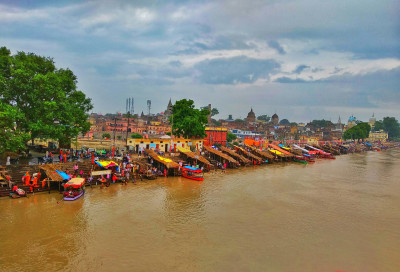
Ayodhya, located in the northern Indian state of Uttar Pradesh, is a city of great historical, cultural, and religious significance. Here’s a brief overview: Ayodhya is widely believed to be the birthplace of Lord Rama, the seventh incarnation of Lord Vishnu, as per the Hindu epic Ramayana. This makes it one of the seven most sacred cities (Sapta Puri) in Hinduism. The city is a major pilgrimage site for Hindus. The Ram Janmabhoomi, believed to be the exact birthplace of Lord Rama, has been a focal point of religious devotion and historical disputes. The construction of the Ram Temple, following the Supreme Court's verdict in 2019, has further heightened its religious significance. Ayodhya is home to numerous temples dedicated to Lord Rama and other deities. Notable temples include the Hanuman Garhi, a temple dedicated to Lord Hanuman; Kanak Bhawan, associated with Sita and Rama; and the Nageshwarnath Temple, linked to Kush, son of Lord Rama. The city comes alive during festivals such as Ram Navami, which celebrates the birth of Lord Rama, and Diwali, marking his return to Ayodhya after defeating Ravana. These festivals are celebrated with grand processions, decorations, and cultural programs. Ayodhya is rich in cultural heritage, with its traditions, rituals, and festivals reflecting the ancient Vedic culture. The city's historical monuments and religious practices offer a glimpse into India's profound spiritual legacy. Ayodhya features a blend of ancient and medieval architecture, with numerous temples and ghats (riverfront steps) along the Sarayu River. The city's landscape is dotted with religious structures that showcase various architectural styles. The sacred Sarayu River flows through Ayodhya, adding to the city's spiritual ambiance. Pilgrims often take holy dips in the river, believing it to cleanse their sins. Besides its religious sites, Ayodhya offers several attractions, including the Ram Katha Park, which hosts performances of the Ramayana; the Treta Ke Thakur, a temple believed to mark the spot where Lord Rama performed the Ashwamedha Yagna; and various ghats along the Sarayu River. Ayodhya's deep-rooted spiritual and cultural significance makes it a revered destination for pilgrims and travelers seeking to explore India's ancient heritage.
Country
India
Best Time to Visit
January, February, March, October, November, December
Ideal Duration
n/a
Tourist Visa
You can apply for a tourist visa if you're visiting India for recreation, sightseeing, or to meet friends and relatives. You can also apply for a tourist visa if you're attending a short-term yoga program or medical treatment.
You can apply for an e-visa online.
Mandatory Documents:
1. Passport: Original passport valid for at least 6 months with at least 3 blank visa pages, plus a photocopy of the passport's data page.
2. Photographs: Two passport-size photographs (2x2 inches) glued to the visa application form as per instructions.
3. Visa Application Form: Fill out the Indian Government visa application form online at www.indianvisaonline.gov.in. Ensure your signature matches your passport signature and validate the data with a declaration signature at the bottom of page 2.
Additional Documents (Depending on Applicant's Situation):
• For Applicants of Indian Origin (Born Indian):
o Surrender Certificate or cancelled Indian passport copy or sworn affidavit.
• For Applicants of Indian Origin (Naturalized):
o First passport copy (if issued in India), Nationality Certificate, or sworn affidavit.
• Explanation for Birth in India (if not of Indian origin): Letter in English addressed to consular services explaining details and reasons.
• Parent of Indian Descent Born in France: Statement confirming no previous Indian passport or nationality.
• Joining Specific Organizations in India: Official invitation letter in a sealed envelope from the organization.
• Property Ownership Intention: Letter from Reserve Bank of India granting permission to acquire property and proof of property ownership in India.
• Minor Applicants: French "livret de famille" or birth certificate, ID proof of each parent, and travel authorization letter signed by both parents.
• Dual Nationality: Copy of the second passport.
• Applicants of Pakistani Origin: Reference form as per current nationality and additional documents based on current or previous nationality.
Declaration:
Certification: Acknowledgment of submitting a complete application and acceptance of the minimum processing time required.
Make sure to gather all necessary documents according to your specific situation and follow the guidelines closely to ensure a smooth visa application process. If you have any more questions or need further clarification on any of these requirements, feel free to ask!
Disclaimers
The above list of documents is the standard requirement for the visa application. The Embassy/Consulate/High Commission/Application Centres reserve the right to request additional documents for verification.
Travelspoc does not guarantee the outcome of any visa application. Decisions on visa applications are at the sole discretion of the respective Embassy/Consulate/High Commission.
The official website for applying for an Indian visa is:
