

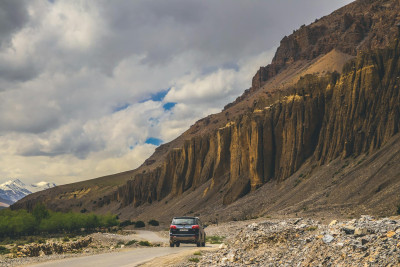
Dhankar is a scenic village located in the Spiti Valley of Himachal Pradesh, India. Perched atop a high cliff overlooking the confluence of the Spiti and Pin Rivers, Dhankar is renowned for its ancient monastery, stunning landscapes, and rich cultural heritage. Here are some key aspects of Dhankar: The Dhankar Monastery, also known as Dhankar Gompa, is one of the oldest and most important monastic complexes in the Spiti Valley. Dating back over a thousand years, the monastery is perched precariously on a rocky spur, offering panoramic views of the surrounding valley. It is renowned for its ancient murals, statues, and scriptures, as well as its historical significance as a center of Buddhist learning and meditation. Dhankar is surrounded by breathtaking Himalayan landscapes, with rugged mountains, deep gorges, and barren valleys. The village offers stunning views of the Spiti Valley and the confluence of the Spiti and Pin Rivers, creating a dramatic backdrop for photography and exploration. A short trek from the village leads to the picturesque Dhankar Lake, nestled amidst high mountain peaks. The lake is a sacred site for the local Tibetan Buddhist community and offers a peaceful setting for meditation and reflection. Dhankar is home to a vibrant Tibetan Buddhist community, and visitors can experience the rich cultural heritage of the region through its festivals, rituals, and traditions. The village hosts various religious ceremonies and festivals throughout the year, including the Dhankar Gustor festival, which celebrates the victory of good over evil. Dhankar serves as a base for various treks and trails in the Spiti Valley, offering opportunities for adventure enthusiasts to explore the rugged Himalayan terrain. Popular trekking routes include the trek to nearby villages such as Lalung and Lhalung, as well as longer treks to remote areas in the region. Dhankar features traditional Tibetan-style architecture, with whitewashed mud-brick houses and flat roofs adorned with prayer flags. The village retains its old-world charm and rustic appeal, providing visitors with a glimpse into traditional Himalayan life. Dhankar is accessible by road from major towns in Himachal Pradesh, including Shimla and Manali. The journey to Dhankar is itself a scenic experience, with winding mountain roads offering panoramic views of the Himalayas and the Spiti River Valley. Overall, Dhankar offers visitors a unique blend of ancient heritage, spiritual significance, and natural beauty, making it a must-visit destination for travelers seeking adventure and cultural immersion in the Himalayas.
Country
India
Best Time to Visit
May, June, July, August, September
Ideal Duration
n/a
Tourist Visa
You can apply for a tourist visa if you're visiting India for recreation, sightseeing, or to meet friends and relatives. You can also apply for a tourist visa if you're attending a short-term yoga program or medical treatment.
You can apply for an e-visa online.
Mandatory Documents:
1. Passport: Original passport valid for at least 6 months with at least 3 blank visa pages, plus a photocopy of the passport's data page.
2. Photographs: Two passport-size photographs (2x2 inches) glued to the visa application form as per instructions.
3. Visa Application Form: Fill out the Indian Government visa application form online at www.indianvisaonline.gov.in. Ensure your signature matches your passport signature and validate the data with a declaration signature at the bottom of page 2.
Additional Documents (Depending on Applicant's Situation):
• For Applicants of Indian Origin (Born Indian):
o Surrender Certificate or cancelled Indian passport copy or sworn affidavit.
• For Applicants of Indian Origin (Naturalized):
o First passport copy (if issued in India), Nationality Certificate, or sworn affidavit.
• Explanation for Birth in India (if not of Indian origin): Letter in English addressed to consular services explaining details and reasons.
• Parent of Indian Descent Born in France: Statement confirming no previous Indian passport or nationality.
• Joining Specific Organizations in India: Official invitation letter in a sealed envelope from the organization.
• Property Ownership Intention: Letter from Reserve Bank of India granting permission to acquire property and proof of property ownership in India.
• Minor Applicants: French "livret de famille" or birth certificate, ID proof of each parent, and travel authorization letter signed by both parents.
• Dual Nationality: Copy of the second passport.
• Applicants of Pakistani Origin: Reference form as per current nationality and additional documents based on current or previous nationality.
Declaration:
Certification: Acknowledgment of submitting a complete application and acceptance of the minimum processing time required.
Make sure to gather all necessary documents according to your specific situation and follow the guidelines closely to ensure a smooth visa application process. If you have any more questions or need further clarification on any of these requirements, feel free to ask!
Disclaimers
The above list of documents is the standard requirement for the visa application. The Embassy/Consulate/High Commission/Application Centres reserve the right to request additional documents for verification.
Travelspoc does not guarantee the outcome of any visa application. Decisions on visa applications are at the sole discretion of the respective Embassy/Consulate/High Commission.
The official website for applying for an Indian visa is:
