

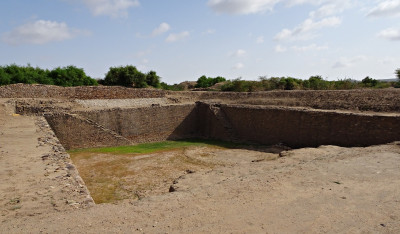
Dholavira is an archaeological site located in the state of Gujarat, India. It is one of the five largest Harappan sites in the Indian subcontinent and provides valuable insights into the ancient Indus Valley Civilization (Harappan Civilization). Here's an overview of Dholavira: Dholavira dates back to the 3rd millennium BCE and flourished during the Mature Harappan period (circa 2600-1900 BCE). It was an important center of the ancient Indus Valley Civilization, known for its advanced urban planning, sophisticated water management systems, and robust trade networks. The archaeological site of Dholavira was first discovered in 1967-68 by J.P. Joshi and has since been extensively excavated by the Archaeological Survey of India (ASI). Excavations have unearthed the remains of a fortified citadel, residential areas, marketplace, warehouses, and a sophisticated water conservation system. Dholavira is renowned for its well-planned city layout, divided into three parts: the Citadel, the Lower Town, and the Middle Town. The Citadel, situated on a hill, housed the elite and administrative buildings, while the Lower Town comprised residential and craft production areas. The city was fortified with massive stone walls and had elaborate gateways. One of the most remarkable features of Dholavira is its advanced water management system. The site features an intricate network of reservoirs, dams, and channels designed to capture and store rainwater. The largest reservoir, known as the "Baan Ganga," is an impressive structure with steps leading down to the water level. Archaeological excavations at Dholavira have uncovered a wealth of artifacts, including pottery, seals, beads, stone tools, and metal objects. The discovery of seals with Indus script inscriptions and unique symbols has provided valuable clues about the social, economic, and cultural life of the Harappan people. Dholavira's archaeological remains offer insights into the daily life, trade practices, religious beliefs, and technological advancements of the Harappan Civilization. The discovery of a large signboard with ten Harappan symbols has sparked debates among archaeologists and linguists about the script and language used by the Harappan people. Dholavira has gained recognition as an important archaeological site and tourist destination in Gujarat. Visitors can explore the excavated remains, walk through the ancient streets, and learn about the civilization that thrived here over 4,000 years ago. The site has basic visitor facilities and is accessible via road from major cities like Bhuj and Ahmedabad. Dholavira stands as a testament to the ingenuity and sophistication of the ancient Indus Valley Civilization, offering a fascinating glimpse into India's rich archaeological and cultural heritage.
Country
India
Best Time to Visit
January, February, March, October, November, December
Ideal Duration
n/a
Tourist Visa
You can apply for a tourist visa if you're visiting India for recreation, sightseeing, or to meet friends and relatives. You can also apply for a tourist visa if you're attending a short-term yoga program or medical treatment.
You can apply for an e-visa online.
Mandatory Documents:
1. Passport: Original passport valid for at least 6 months with at least 3 blank visa pages, plus a photocopy of the passport's data page.
2. Photographs: Two passport-size photographs (2x2 inches) glued to the visa application form as per instructions.
3. Visa Application Form: Fill out the Indian Government visa application form online at www.indianvisaonline.gov.in. Ensure your signature matches your passport signature and validate the data with a declaration signature at the bottom of page 2.
Additional Documents (Depending on Applicant's Situation):
• For Applicants of Indian Origin (Born Indian):
o Surrender Certificate or cancelled Indian passport copy or sworn affidavit.
• For Applicants of Indian Origin (Naturalized):
o First passport copy (if issued in India), Nationality Certificate, or sworn affidavit.
• Explanation for Birth in India (if not of Indian origin): Letter in English addressed to consular services explaining details and reasons.
• Parent of Indian Descent Born in France: Statement confirming no previous Indian passport or nationality.
• Joining Specific Organizations in India: Official invitation letter in a sealed envelope from the organization.
• Property Ownership Intention: Letter from Reserve Bank of India granting permission to acquire property and proof of property ownership in India.
• Minor Applicants: French "livret de famille" or birth certificate, ID proof of each parent, and travel authorization letter signed by both parents.
• Dual Nationality: Copy of the second passport.
• Applicants of Pakistani Origin: Reference form as per current nationality and additional documents based on current or previous nationality.
Declaration:
Certification: Acknowledgment of submitting a complete application and acceptance of the minimum processing time required.
Make sure to gather all necessary documents according to your specific situation and follow the guidelines closely to ensure a smooth visa application process. If you have any more questions or need further clarification on any of these requirements, feel free to ask!
Disclaimers
The above list of documents is the standard requirement for the visa application. The Embassy/Consulate/High Commission/Application Centres reserve the right to request additional documents for verification.
Travelspoc does not guarantee the outcome of any visa application. Decisions on visa applications are at the sole discretion of the respective Embassy/Consulate/High Commission.
The official website for applying for an Indian visa is:
