

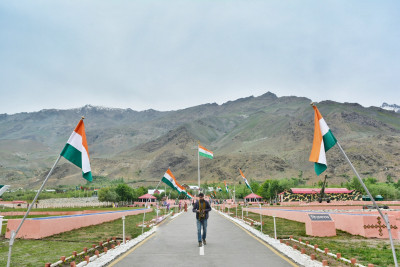
Kargil is a town located in the Kargil district of the Union Territory of Ladakh, India. It is situated along the banks of the Suru River, nestled amidst the towering peaks of the Himalayas and the Zanskar Range. Here's a detailed description of Kargil: Kargil is strategically located in the western part of Ladakh, close to the Line of Control (LoC) that separates India and Pakistan-administered Kashmir. The town is surrounded by rugged mountains, deep valleys, and the barren landscape characteristic of the Trans-Himalayan region. History and Cultural Significance: Kargil has a rich history that dates back centuries. It was an important center along the ancient Silk Route, facilitating trade between Central Asia, Tibet, and India. The town has been influenced by various cultures, including Tibetan, Central Asian, and Indian, resulting in a diverse cultural tapestry reflected in its traditions, languages, and cuisine. Strategic Importance: Due to its proximity to the Line of Control, Kargil holds strategic significance for India's defense forces. The town gained international attention during the Kargil War in 1999 when Indian and Pakistani forces engaged in armed conflict along the border. Tourist Attractions: Despite its historical and strategic significance, Kargil remains relatively off the beaten path for tourists. However, it offers several attractions worth exploring. Mulbekh Monastery, situated en route to Kargil from Leh, is renowned for its ancient rock carvings and Buddhist murals. The Suru Valley, with its verdant landscapes, gushing rivers, and picturesque villages, offers opportunities for trekking, camping, and exploring the local way of life. Dras War Memorial, located near Kargil, commemorates the sacrifices made by Indian soldiers during the Kargil War and provides insights into the region's military history. Cultural Diversity: Kargil is home to people of diverse ethnicities, including Ladakhi Muslims, Tibetan Buddhists, and Dardic communities. This cultural diversity is reflected in the town's architecture, festivals, and religious practices. The region celebrates various festivals such as Losar (Tibetan New Year), Eid, and the Ladakh Festival, where locals showcase their traditional music, dance, and cuisine. Adventure Opportunities: The rugged terrain surrounding Kargil offers ample opportunities for adventure activities such as trekking, mountaineering, river rafting, and camping. The nearby peaks and passes, including Nun Kun, Suru Valley, and the Pensi La Pass, attract adventure enthusiasts seeking thrilling experiences amidst the Himalayan wilderness. Overall, Kargil is a town steeped in history, culture, and natural beauty, offering travelers a glimpse into the diverse heritage and stunning landscapes of the Ladakh region.
Country
India
Best Time to Visit
April, May, June
Ideal Duration
n/a
Tourist Visa
You can apply for a tourist visa if you're visiting India for recreation, sightseeing, or to meet friends and relatives. You can also apply for a tourist visa if you're attending a short-term yoga program or medical treatment.
You can apply for an e-visa online.
Mandatory Documents:
1. Passport: Original passport valid for at least 6 months with at least 3 blank visa pages, plus a photocopy of the passport's data page.
2. Photographs: Two passport-size photographs (2x2 inches) glued to the visa application form as per instructions.
3. Visa Application Form: Fill out the Indian Government visa application form online at www.indianvisaonline.gov.in. Ensure your signature matches your passport signature and validate the data with a declaration signature at the bottom of page 2.
Additional Documents (Depending on Applicant's Situation):
• For Applicants of Indian Origin (Born Indian):
o Surrender Certificate or cancelled Indian passport copy or sworn affidavit.
• For Applicants of Indian Origin (Naturalized):
o First passport copy (if issued in India), Nationality Certificate, or sworn affidavit.
• Explanation for Birth in India (if not of Indian origin): Letter in English addressed to consular services explaining details and reasons.
• Parent of Indian Descent Born in France: Statement confirming no previous Indian passport or nationality.
• Joining Specific Organizations in India: Official invitation letter in a sealed envelope from the organization.
• Property Ownership Intention: Letter from Reserve Bank of India granting permission to acquire property and proof of property ownership in India.
• Minor Applicants: French "livret de famille" or birth certificate, ID proof of each parent, and travel authorization letter signed by both parents.
• Dual Nationality: Copy of the second passport.
• Applicants of Pakistani Origin: Reference form as per current nationality and additional documents based on current or previous nationality.
Declaration:
Certification: Acknowledgment of submitting a complete application and acceptance of the minimum processing time required.
Make sure to gather all necessary documents according to your specific situation and follow the guidelines closely to ensure a smooth visa application process. If you have any more questions or need further clarification on any of these requirements, feel free to ask!
Disclaimers
The above list of documents is the standard requirement for the visa application. The Embassy/Consulate/High Commission/Application Centres reserve the right to request additional documents for verification.
Travelspoc does not guarantee the outcome of any visa application. Decisions on visa applications are at the sole discretion of the respective Embassy/Consulate/High Commission.
The official website for applying for an Indian visa is:
