

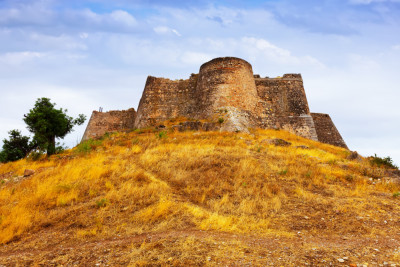
Naggar Castle is a historic fortress located in the picturesque town of Naggar in the Kullu district of Himachal Pradesh, India. Naggar Castle sits majestically atop a hill overlooking the town of Naggar, offering breathtaking views of the surrounding mountains and valleys. It is situated approximately 20 kilometers from the popular hill station of Manali, making it easily accessible for tourists. The castle is a fine example of traditional Himachali architecture, characterized by its wooden and stone structure. Built primarily with local materials, the castle reflects the indigenous building techniques of the region. The architecture seamlessly blends elements of both Pahari and colonial styles, showcasing intricate wood carvings, sloping roofs, and sturdy stone walls. Naggar Castle has a rich history dating back several centuries. It was constructed in the 15th century by Raja Sidh Singh of Kullu as his royal residence. Over the years, the castle served as the seat of the Kullu kingdom and witnessed the rise and fall of various dynasties. Later, it became the residence of British officials during the colonial era. The castle complex comprises several structures, including a main palace, a temple, and a courtyard. The main palace features ornate wooden balconies, intricately carved doors, and spacious halls adorned with traditional furnishings. The castle's temple, dedicated to Lord Shiva, is an integral part of the complex and attracts devotees and tourists alike. Within the castle premises, there is a museum and art gallery showcasing a collection of ancient artifacts, historical artifacts, traditional Himachali handicrafts, and contemporary artworks. Visitors can explore the exhibits to learn about the region's cultural heritage and artistic legacy. One of the highlights of visiting Naggar Castle is the panoramic views it offers of the surrounding Himalayan landscape. Visitors can soak in the stunning vistas of snow-capped peaks, lush valleys, and meandering rivers from the castle's vantage point, making it a photographer's paradise. Today, Naggar Castle stands as a popular tourist attraction, drawing visitors from far and wide who come to admire its architectural splendor, delve into its history, and enjoy the tranquil ambiance of its surroundings. It is also a favored destination for cultural events, exhibitions, and heritage tours. Overall, Naggar Castle stands as a testament to the rich cultural heritage and architectural legacy of Himachal Pradesh, inviting travelers to embark on a journey through time amidst the serene beauty of the Himalayas.
Country
India
Best Time to Visit
April, May, June
Ideal Duration
n/a
Tourist Visa
You can apply for a tourist visa if you're visiting India for recreation, sightseeing, or to meet friends and relatives. You can also apply for a tourist visa if you're attending a short-term yoga program or medical treatment.
You can apply for an e-visa online.
Mandatory Documents:
1. Passport: Original passport valid for at least 6 months with at least 3 blank visa pages, plus a photocopy of the passport's data page.
2. Photographs: Two passport-size photographs (2x2 inches) glued to the visa application form as per instructions.
3. Visa Application Form: Fill out the Indian Government visa application form online at www.indianvisaonline.gov.in. Ensure your signature matches your passport signature and validate the data with a declaration signature at the bottom of page 2.
Additional Documents (Depending on Applicant's Situation):
• For Applicants of Indian Origin (Born Indian):
o Surrender Certificate or cancelled Indian passport copy or sworn affidavit.
• For Applicants of Indian Origin (Naturalized):
o First passport copy (if issued in India), Nationality Certificate, or sworn affidavit.
• Explanation for Birth in India (if not of Indian origin): Letter in English addressed to consular services explaining details and reasons.
• Parent of Indian Descent Born in France: Statement confirming no previous Indian passport or nationality.
• Joining Specific Organizations in India: Official invitation letter in a sealed envelope from the organization.
• Property Ownership Intention: Letter from Reserve Bank of India granting permission to acquire property and proof of property ownership in India.
• Minor Applicants: French "livret de famille" or birth certificate, ID proof of each parent, and travel authorization letter signed by both parents.
• Dual Nationality: Copy of the second passport.
• Applicants of Pakistani Origin: Reference form as per current nationality and additional documents based on current or previous nationality.
Declaration:
Certification: Acknowledgment of submitting a complete application and acceptance of the minimum processing time required.
Make sure to gather all necessary documents according to your specific situation and follow the guidelines closely to ensure a smooth visa application process. If you have any more questions or need further clarification on any of these requirements, feel free to ask!
Disclaimers
The above list of documents is the standard requirement for the visa application. The Embassy/Consulate/High Commission/Application Centres reserve the right to request additional documents for verification.
Travelspoc does not guarantee the outcome of any visa application. Decisions on visa applications are at the sole discretion of the respective Embassy/Consulate/High Commission.
The official website for applying for an Indian visa is:
