

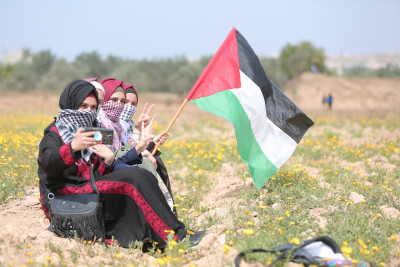
Palestine, situated in the Middle East, is a region with a complex history, diverse cultures, and significant geopolitical importance. The term "Palestine" is often used to refer to the geographic area that includes Israel and the Palestinian territories of the West Bank and Gaza Strip. Arabic is the official language, and Islam is the predominant religion, with Christianity and other religious communities also present. The Palestinian territories use the Israeli New Shekel (ILS) as their official currency. The history of Palestine is deeply intertwined with various civilizations, including the ancient Canaanites, Israelites, Babylonians, Romans, and Ottoman Turks. The region has religious significance for Judaism, Christianity, and Islam, with holy sites such as Jerusalem's Old City hosting religious landmarks like the Western Wall, the Church of the Holy Sepulchre, and the Dome of the Rock. The Israeli-Palestinian conflict, rooted in competing national narratives and territorial claims, has shaped the modern history of the region. The West Bank, Gaza Strip, and East Jerusalem are areas where the Palestinian Authority and Hamas exercise varying degrees of political control. Palestinian culture is diverse, with influences from Arab, Islamic, and Ottoman traditions. Traditional Palestinian clothing, music, and dance, such as the dabke, reflect the cultural heritage. Palestinian cuisine includes dishes like falafel, hummus, and maqluba, showcasing local flavors and ingredients. The concept of "Nakba," meaning catastrophe in Arabic, is used to describe the displacement of Palestinians during the 1948 Arab-Israeli war. The Palestinian diaspora, scattered across the Middle East and around the world, continues to play a significant role in the Palestinian identity. Efforts toward establishing a Palestinian state alongside Israel have faced challenges, and the status of Jerusalem remains a contentious issue. International initiatives, diplomatic efforts, and peace negotiations continue to shape the political landscape. Despite the challenges, Palestinians have made significant contributions to various fields, including literature, art, and science. The resilience of the Palestinian people is reflected in their commitment to cultural preservation, education, and community development. The struggle for self-determination and statehood remains a central theme in Palestinian identity. The United Nations recognizes Palestine as a non-member observer state, and discussions about a two-state solution and the recognition of an independent Palestinian state continue in the international arena. In summary, Palestine is a region with a rich history, cultural diversity, and ongoing geopolitical complexities. The aspirations for self-determination, cultural preservation, and a resolution to the Israeli-Palestinian conflict remain central to the Palestinian experience.
Country
Palestine
Best Time to Visit
April, September, October
Ideal Duration
7 Days Day(s)
Tourist Visa
For visiting Palestine, you generally need to obtain a visa for the country through which you will enter Palestine—Israel, Jordan, or Egypt. Here’s a breakdown of the requirements and process:
1. Visa Requirement:
o Israel: If entering Palestine via Israel, you’ll need to secure an Israeli visa. This visa is subject to Israeli security checks.
o Jordan: If entering Palestine via Jordan, you may need a Jordanian visa. Check with Jordanian authorities for specific requirements.
o Egypt: If entering Palestine via Egypt, you’ll need an Egyptian visa. Confirm with Egyptian authorities regarding the process.
2. Passport Validity:
o Ensure your passport is valid for at least six months from your date of entry.
3. Visa Duration:
o Visas issued by these countries can vary in duration, generally ranging from two weeks to three months.
4. Visa Application:
o Some visas may be obtained upon arrival at the border, while others require prior arrangement. It’s advisable to check the specific visa requirements with the embassy or consulate of the country you are traveling through.
5. Security Checks:
o Note that the issuance of a visa for Palestine may be subject to security checks, especially if you are entering via Israel.
Always verify the latest entry requirements and visa policies with the relevant embassy or consulate before making travel arrangements.
Disclaimers
The above list of documents is the standard requirement for the visa application. The Embassy/Consulate/High Commission/Application Centres reserve the right to request additional documents for verification.
Travelspoc does not guarantee the outcome of any visa application. Decisions on visa applications are at the sole discretion of the respective Embassy/Consulate/High Commission.
