

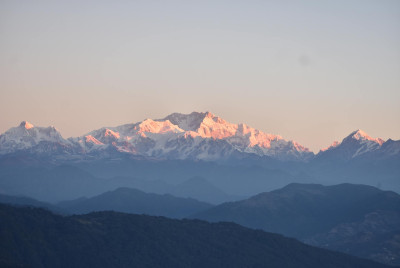
The Himalayas, often referred to as the "Abode of Snow" or "The Roof of the World," is a majestic mountain range in Asia, spanning approximately 2,400 kilometers (1,500 miles) across five countries: India, Nepal, Bhutan, China (Tibet), and Pakistan. Here are some key aspects of the Himalayas: The Himalayas are characterized by towering peaks, deep valleys, glaciers, and rugged terrain. The range is home to some of the world's highest mountains, including Mount Everest, K2, Kangchenjunga, Lhotse, and Makalu. The Himalayas have immense cultural significance, with a rich tapestry of diverse cultures, languages, and traditions. The region is deeply influenced by Hinduism, Buddhism, Islam, and other indigenous belief systems. It's dotted with monasteries, temples, and sacred sites that draw pilgrims and tourists alike. The Himalayas are a biodiversity hotspot, harboring a wide array of flora and fauna. The range encompasses various ecosystems, from subtropical forests to alpine meadows. It's home to iconic species such as the snow leopard, Himalayan tahr, red panda, and Himalayan monal. The Himalayas serve as the source of major rivers in Asia, including the Ganges, Brahmaputra, Indus, Yangtze, and Yellow River. These rivers sustain millions of people downstream, providing water for drinking, agriculture, and hydropower generation. The Himalayas attract adventure enthusiasts from around the globe. Popular activities include trekking, mountaineering, skiing, paragliding, and white-water rafting. The region offers a range of trekking routes, from the famous Everest Base Camp trek to the Annapurna Circuit. The Himalayas face numerous environmental challenges, including deforestation, habitat degradation, climate change, and natural disasters like landslides and glacial lake outburst floods. Melting glaciers and changes in precipitation patterns pose significant risks to the region's ecosystems and communities. The Himalayas have strategic importance due to their proximity to several nations and their role in shaping regional geopolitics. Border disputes, resource competition, and geopolitical tensions are prevalent in the Himalayan region. Overall, the Himalayas are not only a natural wonder of unparalleled beauty but also a region of immense cultural, ecological, and geopolitical significance, playing a vital role in the lives of millions of people across Asia.
Country
India
Best Time to Visit
March, April, May, June, July, August, September, October, November
Ideal Duration
n/a
Tourist Visa
You can apply for a tourist visa if you're visiting India for recreation, sightseeing, or to meet friends and relatives. You can also apply for a tourist visa if you're attending a short-term yoga program or medical treatment.
You can apply for an e-visa online.
Mandatory Documents:
1. Passport: Original passport valid for at least 6 months with at least 3 blank visa pages, plus a photocopy of the passport's data page.
2. Photographs: Two passport-size photographs (2x2 inches) glued to the visa application form as per instructions.
3. Visa Application Form: Fill out the Indian Government visa application form online at www.indianvisaonline.gov.in. Ensure your signature matches your passport signature and validate the data with a declaration signature at the bottom of page 2.
Additional Documents (Depending on Applicant's Situation):
• For Applicants of Indian Origin (Born Indian):
o Surrender Certificate or cancelled Indian passport copy or sworn affidavit.
• For Applicants of Indian Origin (Naturalized):
o First passport copy (if issued in India), Nationality Certificate, or sworn affidavit.
• Explanation for Birth in India (if not of Indian origin): Letter in English addressed to consular services explaining details and reasons.
• Parent of Indian Descent Born in France: Statement confirming no previous Indian passport or nationality.
• Joining Specific Organizations in India: Official invitation letter in a sealed envelope from the organization.
• Property Ownership Intention: Letter from Reserve Bank of India granting permission to acquire property and proof of property ownership in India.
• Minor Applicants: French "livret de famille" or birth certificate, ID proof of each parent, and travel authorization letter signed by both parents.
• Dual Nationality: Copy of the second passport.
• Applicants of Pakistani Origin: Reference form as per current nationality and additional documents based on current or previous nationality.
Declaration:
Certification: Acknowledgment of submitting a complete application and acceptance of the minimum processing time required.
Make sure to gather all necessary documents according to your specific situation and follow the guidelines closely to ensure a smooth visa application process. If you have any more questions or need further clarification on any of these requirements, feel free to ask!
Disclaimers
The above list of documents is the standard requirement for the visa application. The Embassy/Consulate/High Commission/Application Centres reserve the right to request additional documents for verification.
Travelspoc does not guarantee the outcome of any visa application. Decisions on visa applications are at the sole discretion of the respective Embassy/Consulate/High Commission.
The official website for applying for an Indian visa is:
