

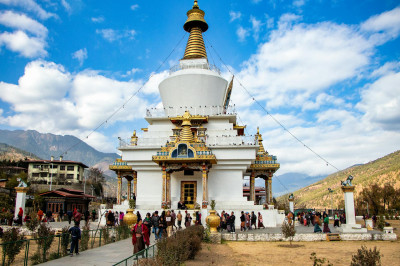
Thimphu, the capital city of Bhutan, is a unique blend of tradition and modernity, nestled in the western part of the country. Here’s a descriptive overview of Thimphu: :Thimphu is surrounded by lush green hills and the picturesque Thimphu River (Wang Chhu), offering breathtaking views and a serene environment. The city's elevation of approximately 2,320 meters (7,656 feet) above sea level provides a cool, temperate climate. Thimphu is the cultural heart of Bhutan, where traditional Bhutanese architecture, customs, and attire are prominently showcased. The city is home to numerous monasteries, stupas, and dzongs (fortresses), reflecting Bhutan's deep-rooted Buddhist heritage. Tashichho Dzong:,This impressive fortress-monastery, also known as the "Fortress of the Glorious Religion," serves as the seat of the Bhutanese government and houses the throne room and offices of the king. It is also the summer residence of the central monastic body. One of Thimphu's most iconic landmarks, the Memorial Chorten is a stupa built in memory of the third king, Jigme Dorji Wangchuck. It is a place of daily worship for many Bhutanese, who come to circumambulate the stupa and offer prayers. Overlooking Thimphu is the colossal Buddha Dordenma statue, one of the largest Buddha statues in the world, standing at 51.5 meters (169 feet). This magnificent statue houses thousands of smaller Buddha statues and offers panoramic views of the city and surrounding valley. The city is home to the National Institute for Zorig Chusum, where students learn the 13 traditional arts and crafts of Bhutan, including painting, sculpture, woodcarving, and embroidery. Visitors can observe the students at work and purchase exquisite handicrafts. Thimphu hosts several vibrant festivals, the most notable being the Thimphu Tshechu, a grand religious festival featuring masked dances, music, and colorful costumes. It is a significant cultural event, drawing locals and tourists alike to celebrate and partake in the festivities. While retaining its traditional charm, Thimphu has embraced modernity with various amenities, including hotels, restaurants, cafes, and shopping centers. The city also has a bustling weekend market where locals sell fresh produce, handicrafts, and traditional goods. Thimphu places a strong emphasis on environmental sustainability. The city is clean and green, with strict regulations on plastic use and a commitment to preserving its natural surroundings. Thimphu is home to several important institutions, including the Royal University of Bhutan, the National Library, and the Folk Heritage Museum. These institutions play a crucial role in preserving Bhutanese culture, history, and education. Overall, Thimphu offers a unique blend of old and new, where visitors can experience the richness of Bhutanese culture, spirituality, and natural beauty while enjoying the comforts of a modern city.
Country
Bhutan
Best Time to Visit
March, April, May, September, October, November
Ideal Duration
n/a
Tourist Visa
To visit Bhutan as a tourist, the visa application process varies depending on your nationality.
1. For Nationals of India, Bangladesh, and Maldives
2. For Nationals of Other Countries
Apply online through the Bhutan Immigration Services Portal.
Alternatively, apply via a licensed Bhutanese tour operator or hotel.
Valid passport with at least six months' validity from the intended date of departure.
Recent passport-sized photograph.
Travel insurance.
USD 100 per person per day.
Children aged 6 to 12: 50% discount.
Children below 6 years: Exempted.
Disclaimers
The above list of documents is the standard requirement for the visa application. The Embassy/Consulate/High Commission/Application Centres reserve the right to request additional documents for verification.
Travelspoc does not guarantee the outcome of any visa application. Decisions on visa applications are at the sole discretion of the respective Embassy/Consulate/High Commission.
Visa Application Centres and Embassy Information
